
OpenPGP Card CSP & Minidriver
Enable your OpenPGP smart card on Windows — for logon, S/MIME, SSL, and more.
Download the Minidriver
Windows minidriver that makes your OpenPGP card usable for smart card logon, compatible with Active Directory and EIDAuthenticate.
Download minidriverDownload the CSP
Cryptographic Service Provider for OpenPGP cards — adds support for requesting certificates from the Windows PKI.
Download CSP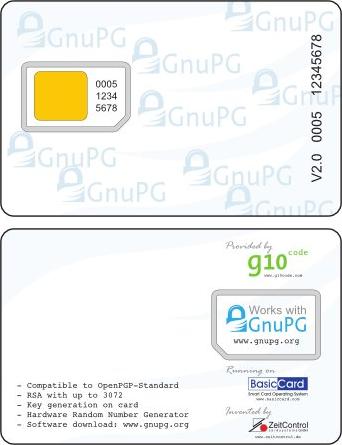
The OpenPGP Card is an ISO 7816-4/-8 compatible smart card — but out of the box it cannot be used for Windows logon or Active Directory authentication because it lacks a CryptoAPI driver.
This minidriver bridges that gap, making the OpenPGP card fully usable on Windows for:
- Smart card logon with EIDAuthenticate or Active Directory
- SSL/TLS client authentication
- S/MIME email signing and encryption
- Any Windows CryptoAPI or CNG application
To generate a certificate on the card, follow this guide.
The CSP complements the minidriver by adding support for requesting certificates from the Windows PKI (ADCS) — enabling your OpenPGP card to work in environments that require enterprise-issued certificates.
Installation
- Copy the binaries to a known location (e.g.
C:\Windows\System32) - Edit the
.regfile at the root of the project and add your card's ATR - OpenPGP Card v2 & v3 ATRs are pre-configured
- Double-click the
.regfile to register the CSP