EIDVirtual - Version 2
No smart card reader? No problem — turn any USB key into a fully functional virtual smart card.
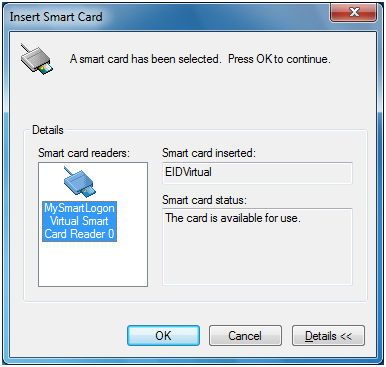
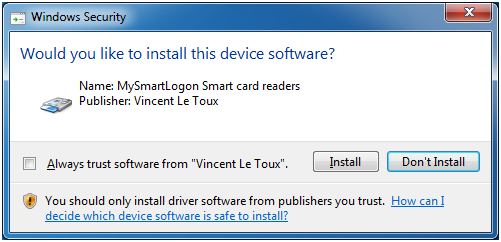
EIDVirtual makes any USB key appear as a virtual smart card in the Windows device manager. It can then be used for smart card logon via EIDAuthenticate or Active Directory — with no physical smart card reader required.
Detailed sequence, for screen readers and when animation is reduced:
- A USB key is inserted.
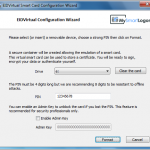
- It is formatted — EIDVirtual turns it into a recognized virtual smart card.
- A PIN is set to protect it.
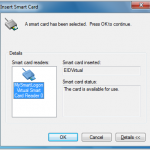
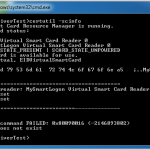
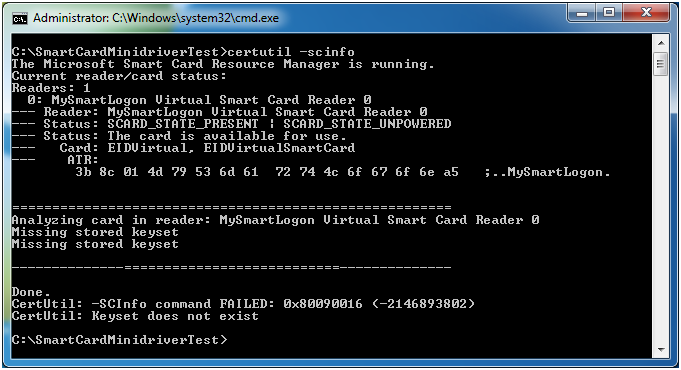
- Verified with certutil -scinfo: the reader and smart card are recognized by Windows.
- The same USB key is recognized identically on any other PC that has the EIDVirtual driver installed — no re-initialization needed.
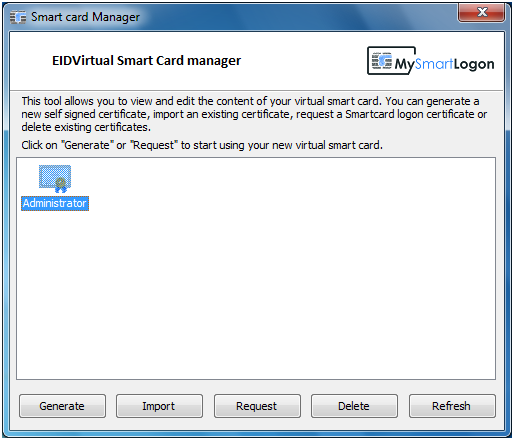
- From there, certificates can be added using the built-in tool.
- It can be used for Windows smart card logon.
- It can be used for SSL/TLS client authentication.
- It can be used to authenticate a Terminal Server / Remote Desktop session.
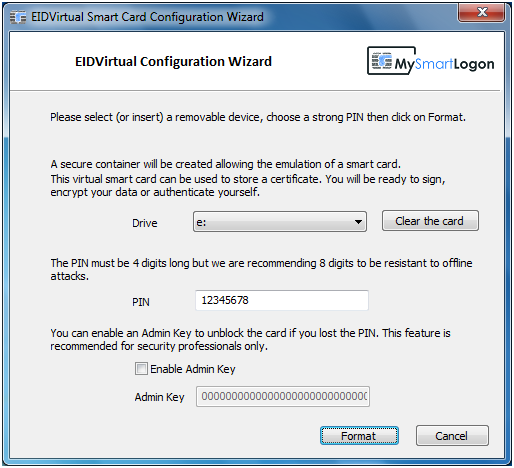
EIDVirtual was designed for administrators and developers who need to test smart card scenarios, or deploy smart card authentication without procuring physical card readers. The emulation is fully compatible with:
The virtual smart card is also recognized by any remote computer that has EIDVirtual installed, making it fully transparent over Remote Desktop.
- Windows 10 or later ; Windows 2016 or later
- A USB key or memory card
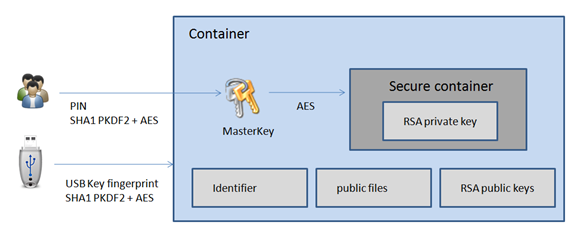
EIDVirtual was carefully designed to protect private keys and PINs. Private data is encrypted twice — first using a USB key fingerprint (including serial number where available, preventing cloning), and second using a PIN-derived key. All cryptographic operations run inside an isolated UMDF host process, separated from all other system processes.